
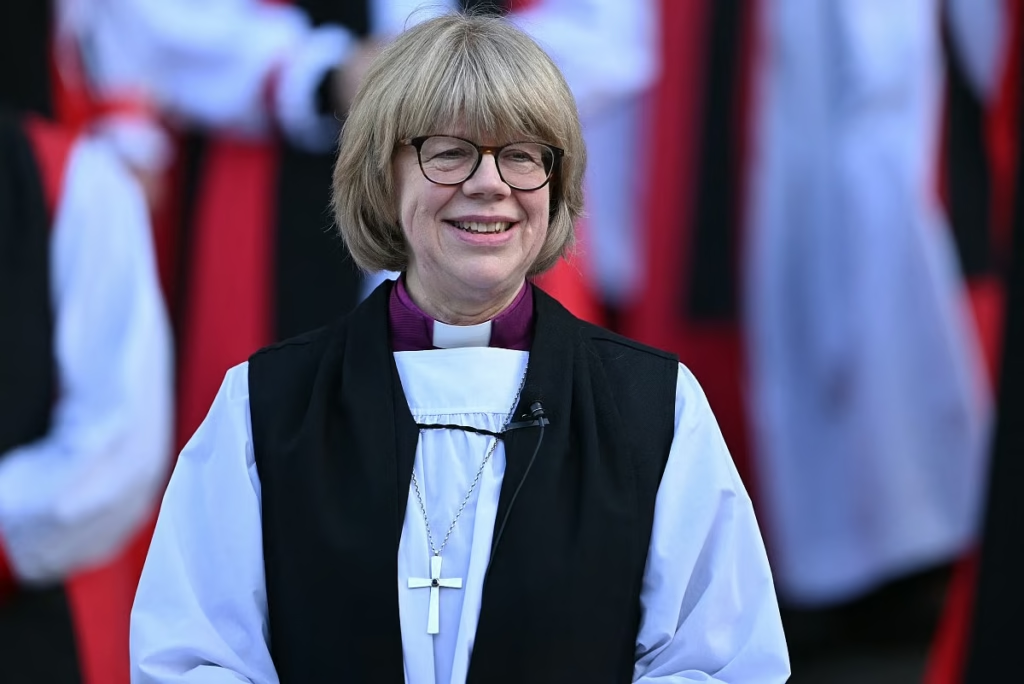
For more than 1,400 years, one of the world’s most powerful religious institutions was led only by men. Generations changed, societies evolved, and women entered leadership roles across politics, business, healthcare, and education, but the top position in the Church of England still remained untouched.
Until now.
On March 25, 2026, Dame Sarah Mullally officially became the first woman ever to lead the Church of England as Archbishop of Canterbury, breaking one of the oldest male-only leadership barriers in the world.
Mullally is now the spiritual leader of around 85 million Anglicans worldwide, making her one of the most influential female leaders in the world today. Her appointment is already being seen as one of the biggest women leadership stories of 2026 because it proves that even the oldest institutions are no longer immune to change.
Historic Ceremony at Canterbury Cathedral
Sarah Mullally was formally enthroned at Canterbury Cathedral in front of nearly 2,000 guests, including Prince William, Princess Catherine, UK Prime Minister Keir Starmer, senior bishops, political leaders, and faith representatives from around the world.
Following centuries-old tradition, Mullally knocked three times on the cathedral’s west door before being welcomed inside by local schoolchildren. She then took her place on the Chair of St Augustine, a symbol of a role that dates back to 597 AD.
But while the ceremony reflected history, it also marked a completely new chapter for the Church.
Prayers were delivered in multiple languages including Spanish, Urdu, Swahili, and Bemba. African choir performances echoed through the cathedral, highlighting the global reach of the Anglican Communion and the importance of the moment far beyond Britain.
One of the most symbolic details came from Mullally’s own outfit. She wore a ceremonial clasp inspired by the buckle from her old nursing belt, connecting her new position to the healthcare career that shaped much of her life before entering ministry.
Mullally’s Rise as a Church Leader
Sarah Mullally’s journey to the highest position in the Church of England is very different from that of most previous Archbishops of Canterbury.
Before entering church leadership, she spent more than 30 years working in the UK’s National Health Service. In 1999, at just 37 years old, she became England’s youngest-ever Chief Nursing Officer and later received the title of Dame for her contribution to healthcare.
She was ordained as a priest in 2002 at the age of 40, becoming part of a generation of women who only recently gained access to leadership positions in the Church.
In 2015, she became Bishop of Crediton, making her one of the Church of England’s earliest female bishops. In 2018, she became the first female Bishop of London, one of the most senior positions in the Church. Her appointment as Archbishop of Canterbury was announced in October 2025 and officially confirmed earlier this year.
Mullally Inherits Church Crisis
Although her appointment is being celebrated around the world, Mullally is stepping into the role during one of the most difficult periods in the Church of England’s recent history.
Her predecessor, Justin Welby, resigned after criticism over the Church’s handling of abuse allegations and safeguarding failures. Mullally now faces enormous pressure to rebuild public trust, improve transparency, and support survivors who have long felt ignored.
In her first sermon as Archbishop, she directly addressed victims and survivors of abuse and promised that the Church would focus on truth, justice, and action.
She also inherits deep divisions over women’s leadership, same-sex blessings, and LGBTQ+ inclusion. Some conservative Anglican groups, particularly in Africa, have openly opposed her appointment because they do not support women in senior church leadership positions.
A Traditional Barrier Falls for Women
Sarah Mullally’s appointment is being viewed as one of the most important women leadership stories of the year because it represents change inside one of the world’s oldest institutions.
For centuries, religion remained one of the hardest leadership spaces for women to enter. Politics changed. Business changed. Education changed. But religious leadership stayed rooted in tradition.
Mullally’s rise from NHS nurse to Archbishop of Canterbury shows how leadership is changing even inside institutions that once seemed impossible to transform.
Her appointment is not only a historic moment for the Church of England. It is also a reminder that barriers that last for centuries can still be broken.
For women across business, politics, healthcare, education, and other male-dominated fields, Sarah Mullally’s rise sends a clear message and shows that no leadership position is permanently out of reach, and even the oldest systems in the world can eventually be changed.