
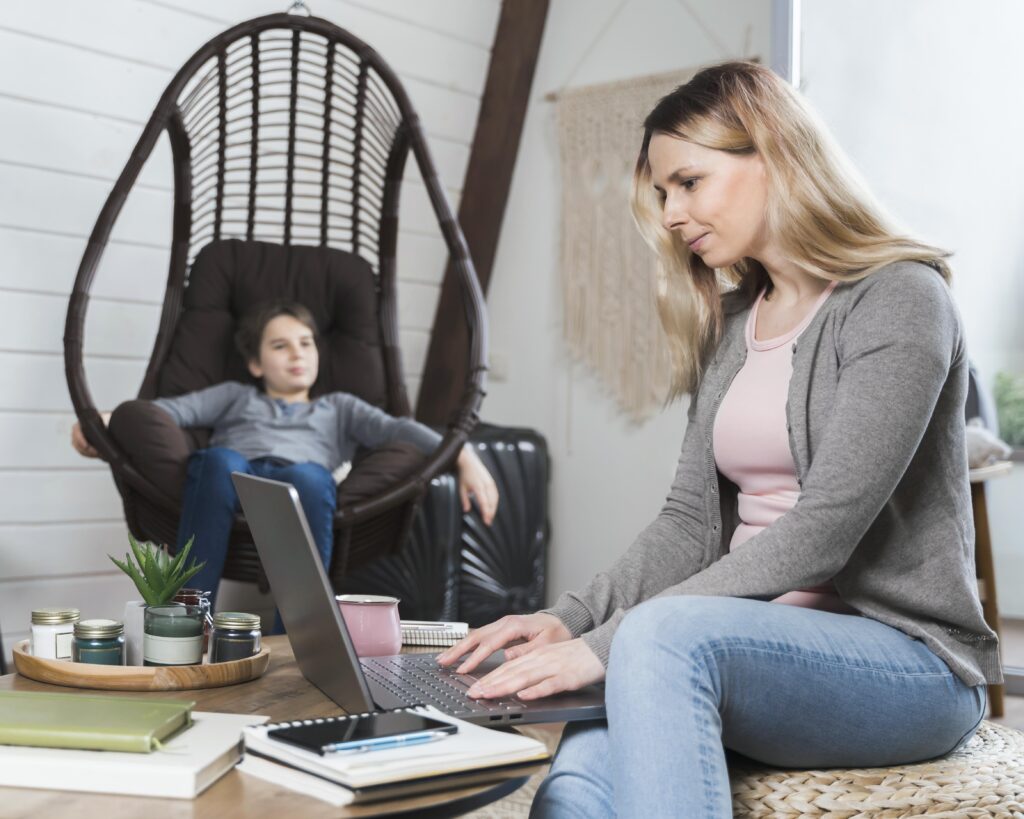
Flexible work helped millions of women stay employed when traditional office schedules no longer matched real life. It reduced commuting time, made childcare easier to manage, created more room for caregiving, and gave many women a way to continue building careers without stepping away completely.
That flexibility matters because women still carry a larger share of household responsibilities, childcare planning, elder care, and emotional labor. For many women, hybrid work is not a lifestyle preference. It is what makes employment possible.
The 2025 International Workplace Group Women and Hybrid Work report found that 63% of women said hybrid work helped them remain in jobs they may otherwise have had to leave because of caregiving responsibilities. The report also showed that women in flexible work arrangements reported lower burnout, better mental health, and stronger productivity across industries like healthcare, HR, finance, education, consulting, and technology.
But while flexible work helped women stay employed, it did not guarantee career growth. Many women are still finding themselves overlooked for promotions, excluded from leadership conversations, and left out of important decisions. The workplace may look more modern, but many companies still reward office visibility more than actual results.
The Promotion Gap Behind Hybrid Work
Flexible work has become one of the biggest reasons women have remained in the workforce over the last few years. Without it, many working mothers and caregivers would have struggled to stay employed.
The 2024 Nature study on hybrid work and productivity found that employees in flexible work environments reported stronger job satisfaction, lower quit rates, and better productivity. Separate workplace data collected by FlexOS also showed that women working in hybrid arrangements often reported productivity gains of more than 80% because of reduced commuting, fewer office distractions, and greater control over their schedules.
The 2025 Women in the Workplace report by Lean In and McKinsey found that women who work remotely three or more days a week are promoted at lower rates than men working in similar arrangements. Around 37% of remote women received promotions in the last two years, compared with 49% of remote men. At entry level, only 25% of remote women were promoted compared with 44% of remote men.
This gap is not about ambition or talent. It is about visibility. Many women are still delivering strong performance, meeting targets, and leading teams. They are simply doing it from home, which means they are often missing the informal conversations, networking moments, and face time with senior leaders that still influence who gets promoted.
The Rise of Proximity Bias
One of the biggest reasons flexible work is hurting women’s careers is proximity bias.
Proximity bias happens when managers see employees who are physically present in the office as more committed, more available, and more leadership-ready than employees who work remotely.
This bias is often subtle. A manager may not openly say that a remote employee is less serious about her career. Over time, that employee may be invited to fewer meetings, considered for fewer stretch assignments, or forgotten when promotion discussions begin.
Research from Live Data Technologies, later reported by major business publications including The Wall Street Journal, found that remote workers overall are 31% less likely to be promoted than employees working in-office or in hybrid roles. The same data also showed that remote workers are 35% more likely to be laid off during periods of restructuring.
Women are more likely to experience this because they are more likely to choose flexible work arrangements in the first place. Many continue to work remotely because they are balancing children, caregiving, family responsibilities, or long commutes. That means women are often paying a career price for the very flexibility that helps them stay employed.
The Glass Ceiling Has Gone Digital
Many companies believe they support women because they offer hybrid work. But flexibility alone does not create equality.
Flexible work solved the access problem for women, but it did not solve the influence problem. Women can now remain employed more easily than before, but many still do not have equal access to sponsors, leadership visibility, travel opportunities, high-profile projects, and informal networks.
Women may now have more access to work, but they still do not always have equal access to power.
That is why many women feel stuck. They are working hard, delivering results, and staying employed, but they are not moving forward at the same speed.
The glass ceiling has not disappeared. It has simply become digital.
Companies still reward whoever is seen most often. Promotions still go to the people with the strongest office presence. Leadership opportunities still depend on informal visibility, not only performance. That system no longer reflects how work actually happens in 2026.
The Cost of Leadership for Women
Many women are starting to question whether leadership roles are even worth the pressure that comes with them.
Senior positions often demand longer hours, more visibility, more travel, and greater availability. Women are expected to handle all of that while also managing responsibilities outside work.
A 2026 workplace report published by The Guardian found that many women are becoming less interested in promotions because leadership increasingly feels exhausting rather than rewarding. Burnout, lack of support, and unequal expectations are pushing women away from leadership, not because they lack ambition, but because the system feels unfair.
Women do not need more confidence. They need better systems. They need promotion structures based on results, not office attendance. They need stronger sponsorship, equal access to leadership opportunities, and managers who understand that flexibility does not mean lower commitment.
Conclusion
Flexible work helped millions of women remain in the workforce when rigid office schedules would have pushed them out.
That progress matters, but staying employed is no longer enough.
Women should not have to choose between flexibility and career growth. They should not have to prove they are serious about work simply because they are not in the office every day.
The companies that will succeed in the future are the ones that stop rewarding visibility over value. They will create workplaces where remote employees have the same access to promotions, leadership opportunities, and career growth as everyone else.
Flexible work gave women a way to stay in the game, and now companies need to make sure they still have a fair chance to win.
Frequently Asked Questions
1. Why does flexible work hurt women’s careers?
Flexible work itself is not the problem. The issue is that many companies still reward office visibility, informal networking, and face time with leadership more than actual performance.
2. What is proximity bias in the workplace?
Proximity bias is when managers see employees who are physically present in the office as more committed or leadership-ready than employees working remotely. This often affects women more because they are more likely to choose flexible work arrangements.
3. Are women working remotely promoted less often than men?
Yes. Recent workplace reports show that women working remotely are promoted at lower rates than men in similar work arrangements, especially at entry and mid-management levels.
4. How can companies make flexible work fairer for women?
Companies need to measure performance through results instead of office attendance. They should also create better sponsorship, leadership visibility, and promotion opportunities for remote and hybrid employees.