
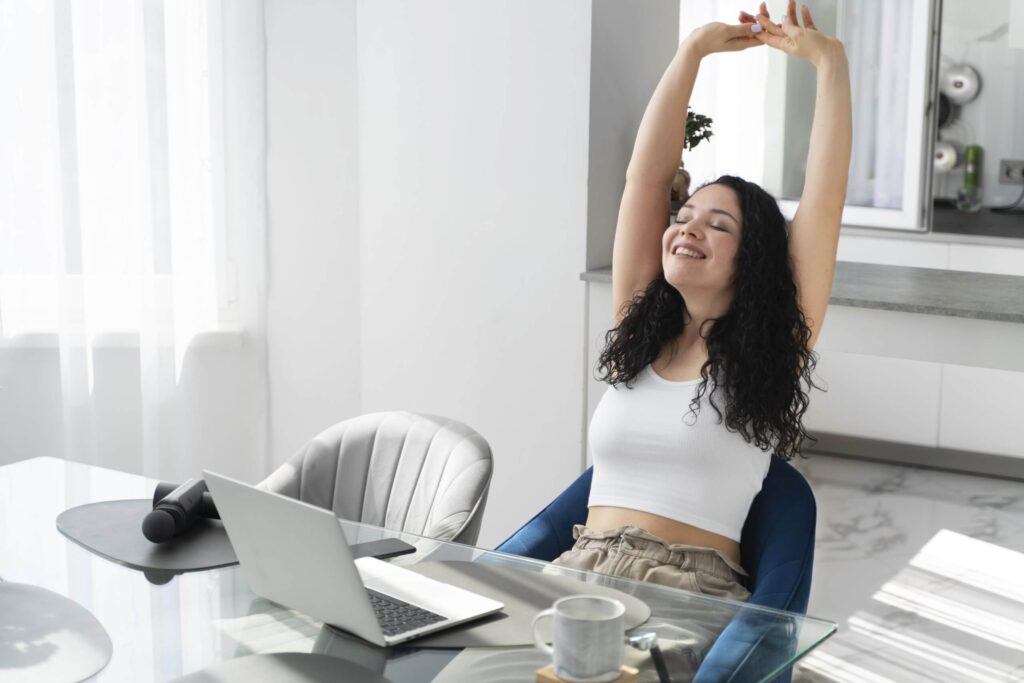
Staying physically active has become difficult for many working women because modern routines leave very little time and energy for themselves. Long work hours, screen time, stress, irregular sleep, and constant responsibilities slowly affect both physical and mental wellbeing.
Fitness is now becoming more connected with energy, strength, mobility, stress management, and long term health rather than only appearance. According to the American College of Sports Medicine’s global fitness trends report, strength training, recovery focused wellness, functional fitness, and personalized health routines are among the biggest priorities shaping current fitness habits.
The good thing is that staying healthy does not always require strict schedules or exhausting gym routines. Fitness habits are now moving toward shorter workouts, flexible movement, and realistic routines that fit into everyday life more naturally.
7 Fitness Habits for Busy Working Women
1. Keep Workouts Realistic
One of the biggest reasons fitness routines fail is because people try to follow schedules that do not realistically fit their lives. Social media has normalized long workouts, strict routines, and highly disciplined lifestyles that look motivating online but become difficult to maintain consistently alongside work and personal responsibilities.
Shorter and more flexible workouts are becoming more popular because they fit modern schedules far more realistically. Fitness experts are now highlighting “snack sized workouts,” mobility sessions, and shorter strength routines because they are easier to maintain consistently without creating unnecessary pressure.
The body responds far better to consistency than occasional intensity. A twenty minute workout repeated regularly often creates better long term results than extreme plans followed for only a few weeks. Many women do not need more pressure around fitness. They need routines that feel manageable enough to continue even during stressful periods.
2. Move More During the Day
Many working women already want to stay active, but busy schedules and long sitting hours make consistency difficult. Long meetings, desk work, travel, and screen time reduce movement without people even noticing how physically inactive their routine has become.
Small forms of movement throughout the day are now becoming a bigger focus in fitness habits. Walking during calls, stretching between meetings, standing after long desk hours, or taking short movement breaks can improve posture, circulation, flexibility, and energy levels. Functional fitness training itself continues to rank among the top worldwide fitness trends because it focuses on improving how the body performs in everyday life.
This approach also feels mentally healthier because movement stops feeling like another separate task. Fitness becomes easier to maintain when it naturally fits into existing routines instead of competing against them.
3. Focus on Strength
One of the biggest changes happening in women’s fitness habits is the move away from thinness focused exercise toward strength and overall health. More women are now prioritizing resistance training because it improves physical strength, mobility, posture, and overall fitness.
Strength training continues to remain one of the biggest priorities in global fitness trends because of its connection with mobility, bone health, and physical health. Industry reports and wearable fitness data continue showing strong growth in resistance training participation, especially among women focusing on long term fitness instead of appearance based goals.
The focus is gradually moving toward feeling physically stronger and more capable instead of only chasing appearance based fitness goals. Resistance training is now being linked with better stamina, posture, bone health, and physical resilience in demanding lifestyles.
4. Prioritize Recovery
Exhaustion has often been treated like proof of productivity in modern work culture. Sleeping less, constantly staying busy, and functioning on stress became associated with ambition. But health experts continue warning that poor recovery affects concentration, emotional stability, hormones, metabolism, and physical health.
Recovery is becoming a much bigger priority as more people begin paying attention to sleep quality, stress levels, and recovery patterns. Sleep tracking, mobility work, stress management, and nervous system recovery are now becoming major priorities in current fitness trends.
Constantly functioning on exhaustion eventually affects patience, focus, confidence, and emotional balance. In leadership roles especially, poor recovery eventually affects decision making and mental clarity just as much as physical health. Rest is no longer being viewed as laziness. It is finally being understood as maintenance for a body handling continuous pressure.
5. Protect Your Energy
Many women already manage their schedules carefully, but physical and emotional energy often gets ignored. Someone may technically have free time after work, but mental exhaustion can still make intense exercise unrealistic.
Wearable technology and personalized wellness tools are becoming more common because people want a better understanding of recovery, sleep quality, stress levels, and overall health. Supported by ACSM’s global fitness trends survey, wearable technology continues to remain the number one worldwide fitness trend. Advanced wearables now track sleep, heart rate, recovery patterns, stress, and other health metrics in real time.
This approach is helping people build a healthier relationship with fitness. Some days support intense movement, while other days require slower workouts, stretching, or recovery. Many high performing women manage schedules carefully but rarely manage recovery with the same seriousness, even though energy directly affects focus, productivity, and long term performance.
6. Ignore Online Wellness Pressure
Social media has turned wellness into a performance. Perfect routines, aesthetic workouts, expensive supplements, and highly optimized lifestyles are constantly presented as normal.
More women are now moving away from that pressure and choosing routines that feel more realistic and manageable. Current fitness trends are moving toward realistic self care, mental wellbeing, and personalized routines instead of extreme optimization culture.
In reality, many of those routines are designed for content creation, not for people balancing full time work, stress, and everyday responsibilities. The problem with performative wellness is that it often creates guilt instead of genuine improvement. Fitness should improve quality of life, not become another unrealistic standard people feel pressured to maintain online.
7. Build Habits That Last
The most effective fitness routine is usually not the strictest one. It is the one that continues through stressful weeks, deadlines, emotional exhaustion, travel schedules, and unexpected interruptions.
The biggest challenge with fitness is not starting a routine but maintaining it during stressful and unpredictable periods of life. Realistic routines allow people to adjust instead of completely giving up after missing a few days. Physical health is built through habits that survive ordinary life, not just ideal situations.
This may be one of the biggest lessons people are finally starting to understand about fitness. Most women do not need harsher discipline or another impossible routine. They need habits that support their physical and mental wellbeing without making life feel even heavier.
Conclusion
Sustainable fitness is not about following extreme routines or constantly chasing perfection. It is about creating habits that support energy, strength, recovery, confidence, and overall health in lifestyles that are already demanding enough.
The women who maintain wellbeing over time are often not the ones following the most intense plans. They are usually the ones building routines they can realistically continue without physically or mentally exhausting themselves in the process.
Fitness is slowly becoming less about appearance and more about feeling strong, balanced, energetic, and physically capable enough to handle everyday life with greater stability and confidence.
Frequently Asked Questions
1. How much exercise do busy working women actually need every week?
Most health experts recommend at least 150 minutes of moderate physical activity weekly, but shorter workouts and regular movement throughout the day can also support fitness and energy levels.
2. Are short workouts really effective?
Yes. Consistent short workouts can improve strength, mobility, stamina, and overall fitness when done regularly. Many fitness trends now focus on shorter and more manageable routines because they fit modern schedules better.
3. Is strength training better than only doing cardio?
Strength training helps improve posture, bone health, stamina, mobility, and muscle strength, while also supporting long term physical health. Many women are now combining strength training with walking or light cardio instead of focusing on cardio alone.
4. Can wearable fitness trackers actually help?
Wearables can help track sleep, recovery, stress, movement, and workout patterns, making it easier to understand daily health habits. Experts suggest using them to notice trends over time instead of depending completely on numbers alone.
5. What is the biggest mistake women make while trying to stay fit?
One of the biggest mistakes is following unrealistic routines that become difficult to maintain consistently. Fitness habits work better when they feel realistic enough to continue during stressful and busy periods of life.