
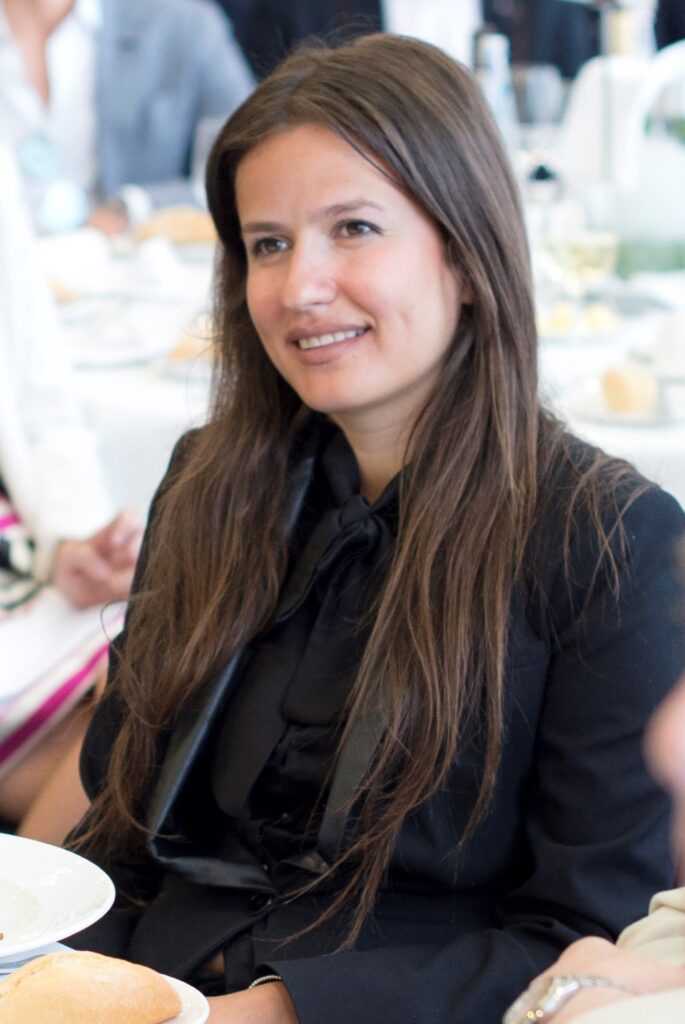
In the world of renewable energy, most breakthroughs are driven by engineers, scientists, and decades of technical research. The story of Inna Braverman follows a different path. Her journey into the energy industry did not begin with an engineering degree or a laboratory discovery. It began with survival.
Inna Braverman, co-founder and CEO of Eco Wave Power, is one of the most influential entrepreneurs in the emerging wave energy industry.
Born in Ukraine on April 11, 1986, just weeks before the catastrophic Chernobyl nuclear disaster, Braverman’s life started under extraordinary circumstances. As an infant, she reportedly suffered respiratory arrest due to environmental pollution linked to the disaster. Her mother, a nurse, revived her through mouth to mouth resuscitation. Braverman often refers to this moment as the reason she feels she was given a second chance at life.
That second chance eventually shaped her mission. Instead of pursuing a conventional career path, she would go on to build a company dedicated to producing clean electricity from one of the planet’s most overlooked renewable resources: ocean waves.
Growing Up With the Ocean
When Braverman was four years old, her family immigrated to Israel and settled in the coastal city of Acre. Living close to the sea, she spent much of her childhood watching waves crash against the shoreline. At the time, the ocean represented curiosity and beauty rather than business opportunity.
Her academic journey also did not point directly toward the energy sector. Braverman studied political science and English literature at the University of Haifa. Yet during her early professional experiences working with renewable energy companies, she began to notice something unusual. Solar and wind energy were rapidly expanding industries, but wave energy remained largely unexplored despite the immense power contained in the world’s oceans.
That gap sparked a question that would define her career: if waves carry so much energy, why was no one successfully turning them into electricity?
The Birth of Eco Wave Power
In 2011, at the age of just 24, Braverman co founded Eco Wave Power alongside entrepreneur David Leb. Their goal was ambitious but simple in principle: create a practical and scalable way to convert ocean waves into renewable electricity.
Previous attempts to harness wave energy had struggled because most systems were built offshore in deep water. These technologies were expensive to install, difficult to maintain, and vulnerable to extreme weather conditions.
Braverman and Leb approached the problem differently. Instead of placing complex machines far out at sea, Eco Wave Power developed a system installed directly on coastal infrastructure such as breakwaters and piers. The technology uses floating devices that move with the waves. As the floats rise and fall, hydraulic pistons generate pressure that drives a generator on land, producing electricity.
This onshore design solved several problems at once. It reduced installation costs, simplified maintenance, and minimized environmental impact on marine ecosystems.
The approach transformed wave energy from a purely experimental concept into something closer to commercial reality.
Turning a Startup Into a Global Company
Building the technology was only the first challenge. Turning a clean energy concept into a viable company required years of persistence, partnerships, and testing.
Eco Wave Power’s early pilot projects began in Israel before the grid-connected installation at Jaffa Port. The project demonstrated that wave energy could be integrated into existing coastal structures and connected to the electricity grid.
A major milestone followed in Gibraltar, where the company installed one of the world’s first grid connected wave energy arrays. The project proved that wave powered electricity could reliably feed into a national power system.
Over time, the company expanded beyond pilot projects, building a development pipeline exceeding 400 megawatts across multiple countries. Eco Wave Power began exploring large-scale wave energy installations in regions including Europe, Asia, and North America, positioning itself as one of the emerging players in the global wave energy sector.
The company eventually listed its shares on Nasdaq Stockholm and later entered the US Nasdaq market, a rare achievement for a wave energy firm. Today Eco Wave Power continues to test and deploy its technology in locations including Israel and the Port of Los Angeles.
Why Wave Energy Matters
The oceans cover more than 70 percent of the planet’s surface, and the movement of waves represents a vast source of untapped energy. Unlike solar or wind power, waves often continue moving even when the sun is not shining or winds are calm.
For that reason, wave energy is increasingly viewed as a complementary renewable resource that could help stabilize future clean electricity systems.
While the sector is still emerging, innovators like Braverman are working to transform wave energy from experimental technology into a reliable contributor to the global energy mix.
Her company’s work demonstrates how creative engineering and strategic thinking can unlock entirely new sources of sustainable power.
Key Lessons for Women Leaders and Entrepreneurs
Braverman’s story carries important lessons for women entrepreneurs and professionals around the world.
1. Purpose Can Drive Innovation
Braverman’s near-death experience linked to the Chernobyl nuclear disaster shaped her mission to build cleaner energy solutions. Personal purpose can become a powerful motivation for meaningful innovation.
2. Your Background Does Not Limit Your Impact
Even without an engineering degree, Inna Braverman entered the renewable energy sector and co-founded Eco Wave Power. Leadership and vision often matter more than traditional credentials.
3. Persistence Is Essential in Innovation
Clean energy technologies take years to develop and scale. Braverman’s journey shows that long-term commitment and resilience are critical when building breakthrough solutions.
4. Women Can Lead in Complex Industries
Energy and infrastructure sectors have historically been male dominated. Braverman’s success demonstrates that women entrepreneurs can lead and shape the future of global technology and sustainability.
Conclusion
The journey of Inna Braverman reflects the transformation of a personal survival story into a global innovation effort. What began with a second chance at life after the Chernobyl disaster eventually evolved into a mission to create cleaner energy solutions for the planet.
Through Eco Wave Power, Braverman has helped push wave energy from a scientific idea toward commercial reality, demonstrating how the movement of the ocean can be harnessed as a renewable resource.
As the world continues searching for sustainable energy solutions, leaders like Inna Braverman show that bold ideas and persistent leadership can transform even the constant motion of the sea into a source of power for the future.
For readers interested in how innovation and leadership are shaping global industries, The Globe Catalyst explores the strategies, ideas, and leaders driving the next phase of business and technological transformation.
frequently Ask Questions
Who is Inna Braverman?
Inna Braverman is the co-founder and CEO of Eco Wave Power. She is known for developing technology that converts ocean waves into renewable electricity.
What is Eco Wave Power and what does it do?
Eco Wave Power is a renewable energy company that develops technology to generate electricity from ocean waves using devices installed on coastal infrastructure such as breakwaters and piers.
What inspired Inna Braverman to work in renewable energy?
Her life was shaped by events surrounding the Chernobyl nuclear disaster shortly after her birth. This experience influenced her mission to focus on cleaner and safer energy solutions.
How does Eco Wave Power’s wave energy technology work?
The system uses floating devices attached to coastal structures that move with ocean waves. The motion creates hydraulic pressure that drives generators and produces electricity.
What can women entrepreneurs learn from Inna Braverman’s journey?
Her story highlights the importance of purpose, persistence, and leadership. It shows that women entrepreneurs can succeed even in complex industries such as renewable energy and technology.