
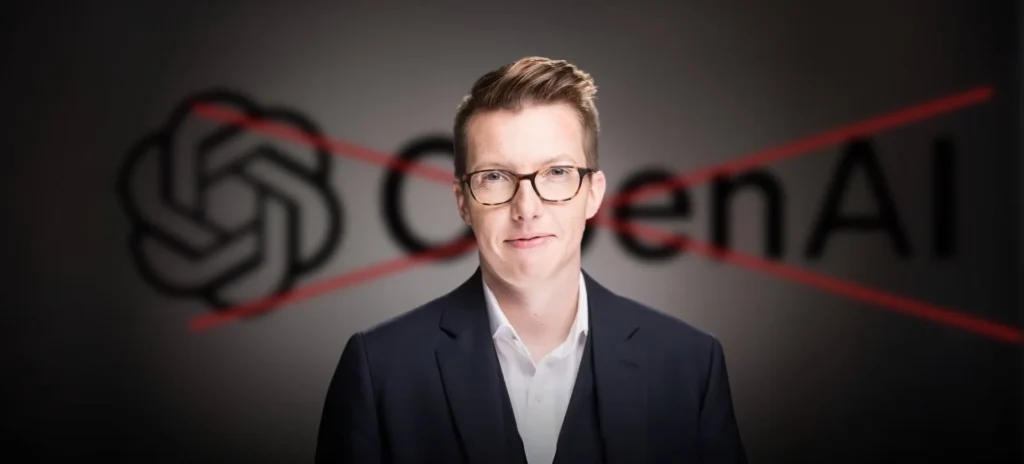
The global technology sector is once again confronting a difficult question about responsibility and power. On March 6, 2026, Caitlin Kalinowski, a senior executive overseeing robotics and hardware initiatives at OpenAI, stepped down from her position following the company’s controversial agreement to deploy its technology within systems used by the United States Department of Defense.
Her resignation has quickly become more than a leadership change. It has turned into a moment that reflects a larger debate unfolding across the global technology industry about how advanced digital systems should be used in national security and military environments.
A Resignation Driven by Principle
Kalinowski confirmed her decision publicly on March 6, 2026, explaining that her departure was not about disagreements with colleagues but about governance and responsibility. In her statement, she emphasized that decisions involving military technology require deeper deliberation and stronger safeguards than what she believed had taken place.
She raised concerns about risks such as surveillance without sufficient oversight and the possibility of systems eventually being used in autonomous military functions without clear human authorization. For Kalinowski, these concerns were not theoretical. They reflected deeper questions about how far technology companies should go when working with defense institutions.
Her statement included a line that quickly circulated across the technology community. The decision, she said, was “about principle, not people.”
The Pentagon Partnership
The controversy centers on OpenAI’s agreement to provide its models within classified government infrastructure used by U.S. defense agencies. The partnership, announced in late February 2026, is intended to help national security teams analyze data, improve planning, and strengthen operational capabilities.
From a government perspective, collaborations like this are becoming increasingly important. Strategic planners view advanced computational systems as critical tools in modern defense strategy. At the same time, many technology professionals believe such arrangements require stronger transparency and governance.
OpenAI has stated that the partnership includes safeguards and that its technology will not be used for domestic surveillance or fully autonomous lethal systems. Still, critics argue that broad agreements with defense agencies leave room for interpretation once technology becomes embedded inside complex national security systems.
Why This Moment Matters for the Technology Industry
Kalinowski’s departure reflects a deeper shift happening across Silicon Valley. Over the past decade, technology companies positioned themselves primarily as consumer innovators. Today they are increasingly becoming strategic partners in global power dynamics.
As digital systems grow more capable, governments see them as tools that can shape intelligence operations, cybersecurity, logistics, and defense strategy. That shift has placed engineers and executives in an unfamiliar position. They are no longer only building products for markets. In many cases, they are creating systems that could influence national security decisions.
This new reality is forcing technology leaders to balance commercial opportunity with ethical responsibility, often under intense scrutiny from policymakers, employees, and the public.
A Rare Voice in Hardware and Robotics Leadership
Kalinowski’s resignation carries additional weight because of her position in the industry. Before joining OpenAI in November 2024, she built a career working on hardware systems and augmented reality technologies at major technology companies including Apple and Meta. Her work focused on connecting advanced software with physical devices, an area that many experts believe will define the next phase of technological innovation.
Within OpenAI, she played a central role in efforts to expand beyond software models into robotics and real world machines. That work was expected to shape future consumer products and intelligent hardware platforms.
Her departure therefore raises questions not only about governance but also about the direction of OpenAI’s robotics ambitions.
Leadership Decisions in a Complex Era
Kalinowski did not criticize colleagues publicly nor escalate the disagreement within the company. Instead, she chose to step away after expressing concerns about the pace and oversight of decisions involving military technology.
Her resignation arrives at a time when technology companies are increasingly being drawn into national security discussions. As governments explore new ways to use advanced digital systems in defense and intelligence operations, decisions made inside technology firms are receiving greater scrutiny from policymakers, employees, and the wider public.
The debate surrounding OpenAI’s Pentagon partnership continues across the technology sector, where questions about governance, transparency, and responsibility are becoming central to how future collaborations between governments and technology companies may unfold.